


A security career touches a lot of ground, from getting licensed and trained to finding your next post and connecting with other professionals.
We’ve gathered the best security guard resources in one place, so you can find what you need fast and come back to it whenever you need it.
Each resource comes with a quick note on who it’s best for, so you can jump straight to what fits. Whether you’re weighing a career in security or already on post, in your first week or eyeing a supervisory or armed role, there’s a resource here to help you.
1. Official and Government Resources
Official sources are the best place to start when you want to become a security guard, since licensing requirements and legal rules come straight from the agencies that enforce them.
State Licensing Agencies
Your state’s licensing agency (often under the Department of Public Safety or a similar body) publishes applications, fees, background check requirements, required training hours, and renewal deadlines. Some states license at the county or city level instead, and a few have no statewide requirement at all, so confirm who regulates guards where you work.
Our guide to security guard licensing requirements by state lists and links to each state’s agency, so you can skip the searching and go straight to the official source.
Best for: Anyone getting licensed for the first time or renewing their license.
State Laws and Administrative Code
Your state’s security laws spell out what you can and can’t do on post. The statutes set the broad rules, and the administrative code fills in the details, like training hours, uniform standards, and what counts as a violation. Between them, they cover:
- Use of force: when force is allowed and what’s off limits
- Arrest and detention authority: whether you can detain someone, and under what conditions
- Uniforms, vehicles, and equipment: what you can wear, drive, and carry, including restrictions on badges, lights, and the word “police”
- Employer obligations: what your company must provide, such as training, insurance, and records
To find the right chapter, search your state’s name plus “private security” or “security officer” along with “administrative code.” The licensing agency’s website often links to it directly. Once you’re there, start with the definitions section so you know exactly how the law defines a security officer, then read the sections on prohibited acts and disciplinary action, since those show what can cost you your license.
Laws change, so check the date the chapter was last amended.
Best for: Working guards, supervisors, and anyone who wants to understand their legal limits.
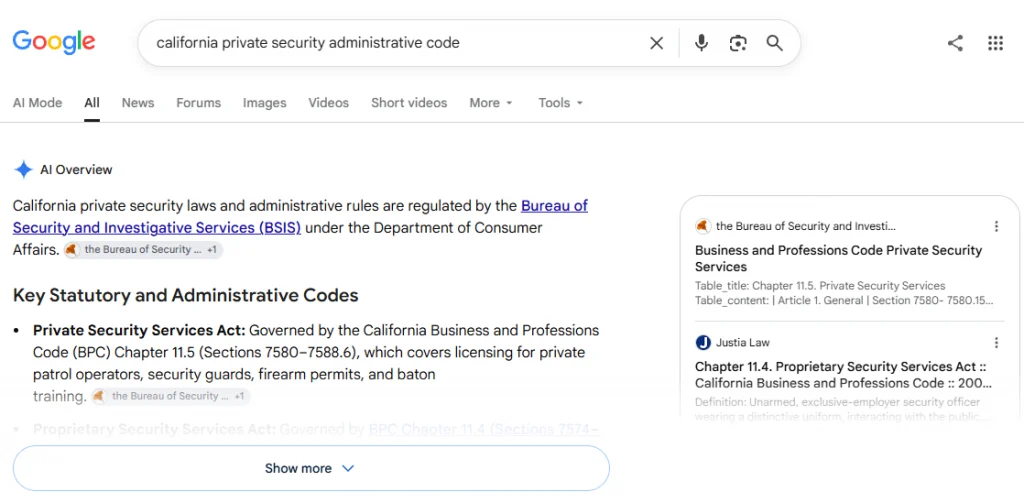
Here’s what you’ll see when you search for California’s private security code. Swap in your state to find yours.
Bureau of Labor Statistics and O*NET OnLine
Before you commit to a security career, or to your next move within it, it helps to know what the work pays, how much demand there is, and where it can lead. These two free government sites answer those questions with up-to-date data, so you aren’t relying on job ads or word of mouth.
The BLS Occupational Outlook Handbook covers median pay (yearly and hourly) and typical entry-level education. It also shows how many people work in the field, how fast it’s projected to grow over the next decade, and how much that employment is expected to change. You can also use it to look up wage data by state and metro area, so you can check whether an offer is in line with what others earn locally.
O*NET OnLine breaks down the activities security roles involve, the careers they connect to, and the various skills the jobs demand. Use it to see if you have transferable skills and characteristics that can help you land a role, and to spot which skills or knowledge to build if you want to move up or into a specialty.
Best for: People weighing a career in security and guards planning their next move.
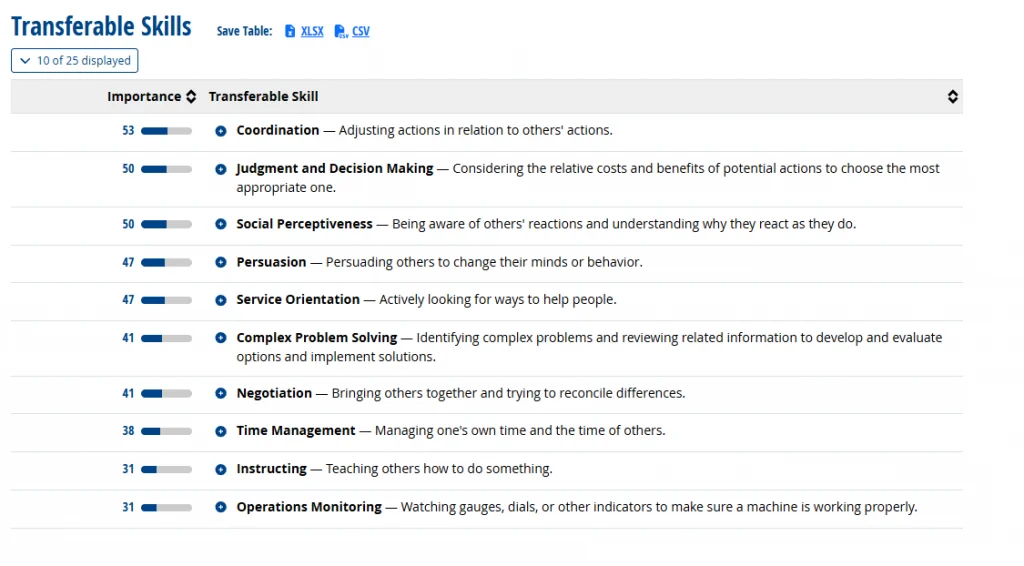 A section from O*NET OnLine.
2. Professional Organizations
Joining a professional group can connect you with other people in the field and keep you up to date on industry news.
ASIS International
ASIS is one of the largest security associations in the world. It runs local chapters you can join, publishes industry research, and hosts a major annual conference. Membership costs more than some other groups, and much of the content focuses on corporate and enterprise security rather than front-line guard work.
ASIS also co-hosts the Global Security Exchange (GSX), which is a large annual conference and trade show with education sessions, networking events, and a show floor of the latest security technology. The event can be a useful stop if you want to meet people who hire for supervisor and management roles or see new equipment up close.
Best for: Experienced guards aiming for management or corporate security careers, and anyone who wants to network.
National Association of Security Companies (NASCO)
NASCO is a trade association for contract security companies. Guards don’t join it directly. Instead, it represents the companies and speaks for the industry in policy discussions, including federal legislation, regulation, and standards for the field.
You can still use the NASCO website to see what’s happening on the business side of security. You can read about its policy and advocacy work to get a sense of where issues like wages, training requirements, and licensing rules may be heading.
If you’re a supervisor or manager looking toward company leadership, following NASCO helps you learn how the industry’s employers think about contracts, compliance, and workforce issues.
Best for: Guards in contract security who want to understand the business side, and supervisors or managers moving toward company leadership

A report published on NASCO.
3. Training & Certifications
Some training is required before you can get your security license or guard card. The rest is up to you, and it’s where you can really set yourself apart.
Extra certifications like first aid or armed guard qualifications can help your application stand out and open the door to better-paying posts.
You can also focus on learning more about specific topics. The more you know, the better you’ll handle tough situations on post, and the stronger your case when you’re up for a promotion or applying for jobs.
Guard Training Courses
Standard guard training takes two routes:
1. Required Security Guard Training: Courses and materials you must complete to be eligible for a license in your state. For example, California requires 8 hours of pre-assignment training, split between online and in-person instruction, before applicants can get their guard card.
2. Optional Security Guard Training: Courses that aren’t mandatory but help you build skills, stand out to employers, and qualify for roles that need more than the basics.
If you’re based in California, we offer all the courses you need to get and keep your guard license.
If you’re looking for optional courses to build your skills and stand out to employers, we have 25 to choose from, including:
- Public relations: Communicate well to defuse tension and earn the trust of clients and the public.
- Access control: Manage who enters and exits a site and spot attempts to get around entry points.
- Liability and legal aspects: Know where your legal responsibilities begin and end.
- Use of force: Learn when force is justified and how to document an incident.
- Active shooter safety and protocols: Prepare to protect yourself and others in a serious emergency.
Best for: New guards building a foundation, and experienced guards who want a refresher or a path toward leadership.
CPR and First Aid
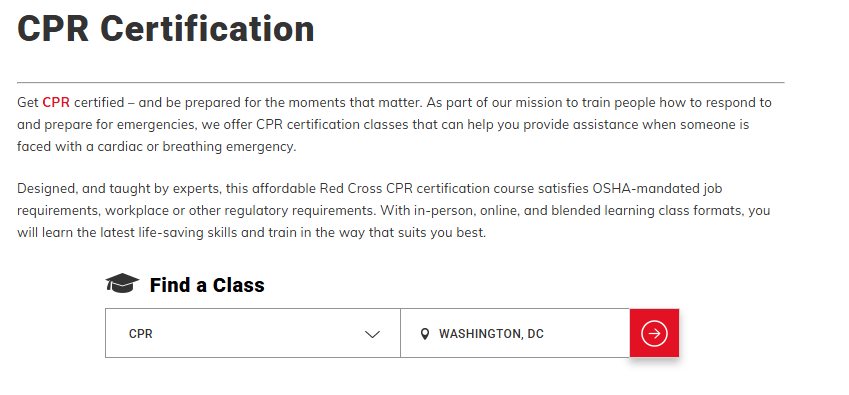
Guards are often the first people on the scene when someone collapses, gets hurt, or has a medical scare. A CPR and first aid course teaches you what to do in those critical moments, before paramedics arrive. You’ll learn how to perform CPR, use an automated external defibrillator (AED), and give basic first aid for injuries and sudden illness.
The American Red Cross and the American Heart Association both offer these courses, which combine in-person and online classes.
Best for: Every guard, including those just starting out.
Firearms Qualification
If you want to become an armed security guard, most states require you to complete a state-approved firearms course and a range qualification, and many also require a separate armed permit on top of your guard card.
If you want to start the process of obtaining your firearm qualification, search “[your state] armed security guard requirements” to find your licensing agency’s page on armed licensing.
Then check the agency’s approved provider list to find an instructor and course that count toward your permit.
Best for: Licensed guards ready to move into armed work.
4. Books
A good book can teach you some extra things that can help your performance at work.
Tip: Check your public library before purchasing a new book if you want to save money, as many branches lend both print and digital copies for free.
On Combat: The Psychology and Physiology of Deadly Conflict in War and in Peace
On Combat, written by Lt. Col. Dave Grossman and Loren Christensen, is a popular pick among guards, police officers, and military members, and it’s often recommended in security forums. It explains what happens to your body and mind under extreme stress, including how a spiking heart rate can affect your vision, hearing, and fine motor skills. It also covers how to prepare for high-stress incidents and how to cope in the aftermath.
Even if you never face a violent encounter, the lessons on handling stress and staying clear-headed apply to confrontations and emergencies of any size. The book leans heavily on a law enforcement and military perspective, and some of its ideas about mindset are debated, so read it as one view rather than the final word.
Best for: Guards who want to understand how stress affects performance, especially those on armed posts or in higher-risk environments.
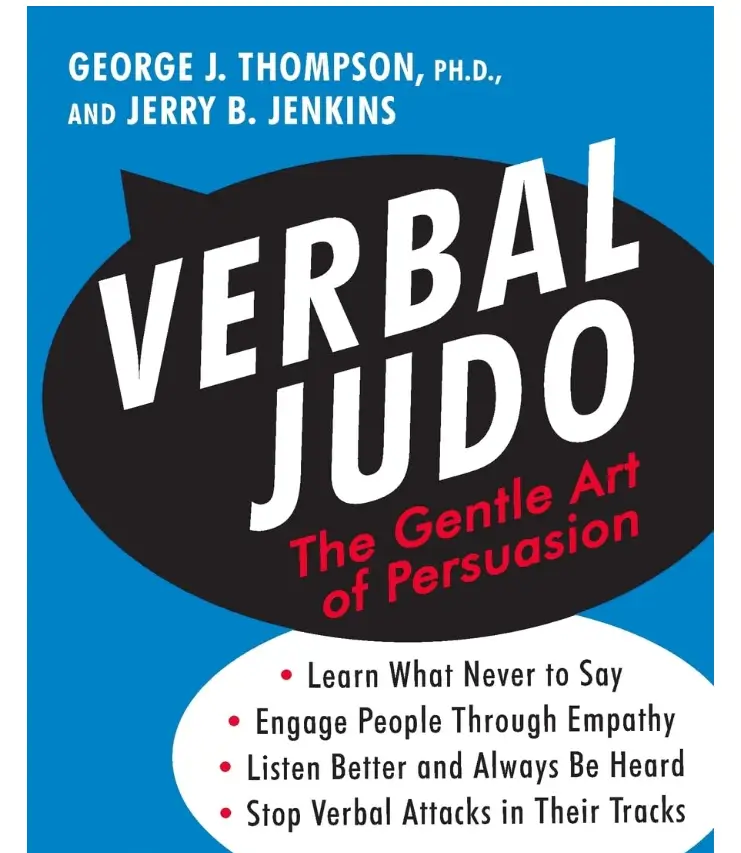
Verbal Judo: The Gentle Art of Persuasion
Verbal Judo, by George J. Thompson and Jerry B. Jenkins, teaches you to redirect angry or uncooperative people using calm, respectful language instead of confrontation. It’s a popular pick with police officers and guards, and it explains how to stay composed, set limits, and guide a tense conversation toward a better outcome.
Its lessons apply directly to checkpoints, parking lots, front desks, and any post where you deal with upset visitors. Pair your reading with practice, since these techniques only become natural once you use them on the job.
Best for: Guards who work with the public and want to resolve tense moments without letting them escalate.
5. Community and Support
Security work can feel isolating, especially on overnight shifts or solo posts. Connecting with other guards through communities gives you a place to ask questions and learn how others handle situations you may be yet to face.
Online Forums and Groups
Reddit is a discussion website made up of topic-based communities called subreddits, where members post questions and stories and reply to one another. It has a large community where guards discuss pay, difficult situations, gear, and employers.
r/SecurityGuards is the main community for working guards. Members trade stories from the job and compare employers, and many ask about licensing and pay. Read through recent threads before posting, since your question has probably been asked before.
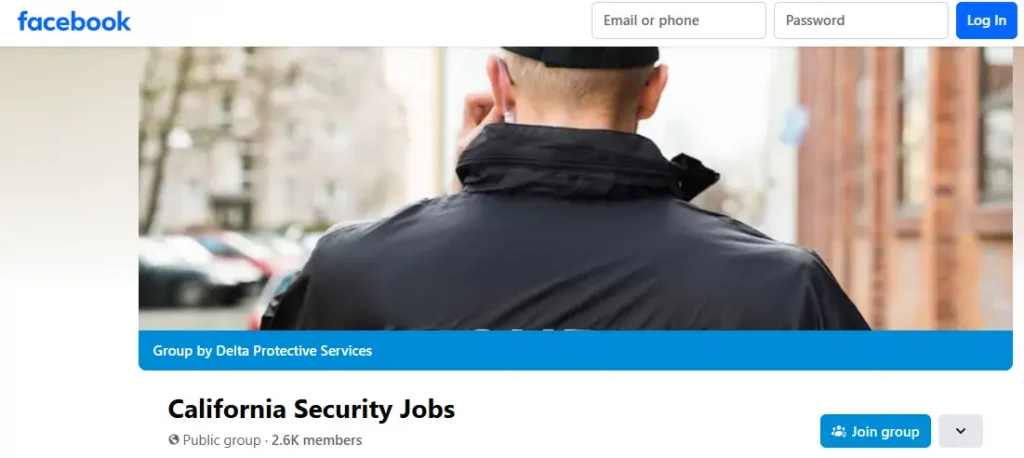
You can also check and contribute to a local security guard Facebook group. Just search for “security guard” or “security officer” along with your state or city. Local groups are especially useful for asking specific questions and hearing about other people’s experiences.
Best for: Guards of any experience level who want honest, real-world perspectives on all aspects of the career.
LinkedIn Groups for Security Professionals
LinkedIn groups are a more professional source of support and information, and focus discussions around career moves and industry news.
For example, the Security Guard Professionals Network and Cruise Ship Security Guards both bring together people who do similar work, so you can ask questions, share job leads, and learn from others in your part of the field.
If you want to find more groups on LinkedIn, search for “security guard,” “physical security,” or “private security” and filter results by Groups. Look for groups with recent posts, active members, and clear rules, and skip any that are mostly spam or job ads.
Best for: Guards who want to follow industry news and see how security professionals at every level talk about their work.
6. Job Search Help
If you’re looking for a security guard job, you’ll need to learn where openings are posted and which programs support your situation can save time and lead to better offers.
Companies With Security Listings
When you’re ready to apply to security roles, you can start by creating accounts on popular job boards, including Indeed, ZipRecruiter, Glassdoor, and LinkedIn. These all have plenty of security guard listings and let you filter by location, pay, and work hours, and they suit anyone who wants to see a wide range of options quickly.
If you want to cut through the noise, you can spend a bit more time applying directly on a security company’s website. Here’s how:
Find security companies in your area. Search “security guard companies in [your city]” or look on Google Maps. Many states also list licensed security companies on the licensing agency’s website, so you can check there too.
- Search for their openings. Google “[company name] careers” or “[company name] security guard jobs [your city]” and you’ll usually see their job pages, with an option to apply.
- Submit application. Apply to the job with your security guard resume, and if you don’t hear back, you can always send a follow-up email a week or two later. That way, you can start to stand out from other applicants who may be flooding job board listings.
Best for: Anyone ready to start applying, including first-time job seekers and experienced guards looking for a better post.
State Workforce Agency Pages
Every state runs a workforce agency that lists job openings and offers free career guidance. Many of its offices are part of the American Job Center network, which provides in-person and online services such as resume help, interview practice, job fairs, and career counseling. Some state sites also have their own job banks that include security guard postings.
Search for your state’s name plus “workforce agency” or “American Job Center” to find the nearest office.
Best for: Guards who want free, in-person support and local connections, especially those who need help covering licensing or training costs.
Veteran Hiring Programs
Security guard work can be an attractive choice for many former service members, since the structure and chain of command feel familiar and the entry requirements are modest.
The Department of Labor’s Veterans’ Employment and Training Service (VETS) and the U.S. Department of Veterans Affairs (VA) provide a wealth of information for veterans, including job search tools, links to assistance programs, general guidance, and other resources. Using this information, you can convert your military duties and training into civilian job qualifications and find a security employer that actively recruits veterans.
Best for: Former service members looking for security guard positions.

7. Health and Wellbeing
Security work often means overnight shifts and long hours on your feet, sometimes with stretches of isolation or high-stress situations. Over time, that can take a toll on your overall health, which is why you might need wellbeing resources to help you do your job well and manage the demands of security work.
Safety Guidance
Security work can pose some physical health risks. Night and rotating shifts disrupt your sleep and body clock, long hours on your feet strain your body, and certain posts can involve a high risk of injury to yourself and others.
The Occupational Safety and Health Administration (OSHA) is the federal agency that sets and enforces workplace safety rules, and it also provides guidance that can apply to security guard work. Its workplace violence pages explain risk factors and ways to reduce them, and its heat and cold pages cover how to protect yourself at outdoor posts.
It’s a good resource to look through in general and help build your awareness of workplace safety as a guard, even if your employer provides their own safety guidance and training.
The National Sleep Foundation offers helpful advice for sleeping during the day and recovering after a run of night shifts. If you work overnight or on rotating schedules and want advice, you can use these sites to find simple, practical changes to your routine that help you sleep better and stay alert.
Best for: Guards on night shifts or higher-risk posts who want to sleep better and stay safe at work.
Stress and Mental Health Support
Guard work can be stressful. You may face mentally taxing situations, like a tense encounter with the public or the aftermath of a serious incident. Talking to someone early can keep that stress from building, and these resources make it easier to start.
Many employers offer an Employee Assistance Program (EAP), which provides free, confidential counseling and referrals for stress, anxiety, family concerns, and financial worries. Ask your supervisor or HR team whether you have access, since many guards never use a benefit they already have.
Outside of work, you can call or text the 988 Lifeline at any hour for free, confidential support. It’s there for anyone in emotional distress, including after a difficult incident on post, and you don’t have to be in crisis to reach out.
The National Alliance on Mental Illness (NAMI) also runs a free helpline for information and referrals, and its local chapters offer support groups and education programs where you can meet people who understand what you’re going through.
Former service members can also reach the Veterans Crisis Line by dialing 988 and pressing 1, or by texting 838255. You don’t need to be enrolled in VA benefits to use it.
Best for: Guards feeling worn down by the job, dealing with stress after a difficult incident, or just looking for someone to talk to.
Put These Security Guard Resources to Work
How far you go in the security field is up to you.
The licensing agencies, training providers, books, and communities in this guide are only useful once you act on them, and every guard who builds a strong career started with one small step.
Pick a resource today, whether that means contacting your state licensing agency or joining a community of working guards, and keep building from there. The more you learn, the more doors open, and the better, healthier guard you become.
Want more help along the way? Visit the GuardTraining blog for practical advice, career guidance, guides, explainers, course information, and more, suitable for any security guard.
We’re here to help you become the best guard you can be.
