



We want every guard who works through our courses to walk away genuinely ready and equipped to handle whatever they encounter throughout their security careers.
That said, our comprehensive training courses can only take you so far. We provide the training content, the structure, the materials, but what you get out of the course depends on how you use them.
Two learners can go through the exact same course and land in very different places, and the difference usually comes down to how actively they engaged with the material along the way.
Our GuardTraining study guide will help you make the most of every course with helpful tips, tricks, and techniques for making your study time count.
Tip 1: Don’t Rely on One Format – Use Everything Your Course Gives You
Our courses include a mix of formats and styles of materials to help you learn.
Each format works your memory in its own way, so skipping any of them means missing out on a chance to help the information sink in.
It’s so easy to settle into whatever feels easiest and treat the rest as optional. Maybe you’re a reader, so the videos and slides end up as something to click through rather than actually learn from.
But if you don’t use each format to its full potential, you could be limiting how much information you actually learn.
For example:
The PDF gives you depth, including the full explanation, the exact wording of different procedures and rules, and all the detail that just doesn’t fit into a slide or a short clip.
The presentation strips things right down to the essentials and is built for recall rather than depth, so it’s brilliant for review but not so much for learning something the first time round.
The videos let you hear information out loud, which engages your brain differently than reading does.
Research shows that a multi-sensory approach, like one that combines reading with listening and watching, tends to strengthen both short-term recall and long-term retention better than sticking to a single format.
Basically, your brain builds stronger, more retrievable memories when the same information reaches it through more than one channel, which is why we created multiple formats for each one of our GuardTraining courses.
Top study tip: Don’t use the same format twice in a row. If you’ve just finished reading the PDF, watch the video next instead of rereading your notes. Then finish with the presentation or practice questions.
Switching between formats keeps your brain engaged and can help learning feel less repetitive.

Tip 2: Don’t Just Read the PDF – Train With It
It’s easy to open a course PDF, highlight a few important bits, and call it a day. That can feel like progress, but just reading something once doesn’t mean you’ll remember it later when you actually need it.
And in security work, gaps in your knowledge can have serious consequences.
On duty, you might need to recall the right procedure in the middle of an incident, or make a split-second decision on the correct actions to take without any time to look things up.
If you’ve only skimmed the material, it won’t be there when you need it.
So it helps to treat your training materials as something to practice with, not just something you read once and move past.
The best way to get value from your PDF is to actively study with it.
Here’s what that can look like:
- Read a section, then close the PDF and write down what you remember before checking it against the original.
- Summarise each section in a couple of sentences, in your own words, instead of relying on the wording in the document.
- Go back over sections a few days later rather than only once, so the information stays fresh instead of fading after a single pass.
- Mark or highlight anything you’re unsure of and return to it specifically, rather than rereading the whole document from the start.
Top study tip: Before jumping into the quiz questions, spend a few minutes writing down everything you can remember from the module without looking at your notes (a technique known as brain dumping). Once you compare your notes against the course afterward, you’ll see what you’ve actually remembered and what you’ve forgotten.
When you go back and fill in the gaps, the information sticks much better than if you just read through the material again.

Tip 3: Don’t Simply Memorize Answers – Use Scenario Practice
Security work is built around decision-making and nuance. A guard is rarely faced with a situation that looks exactly like a question from a training course. Instead, they need to evaluate what is happening, consider the context, and choose the most appropriate course of action.
Memorizing answers alone doesn’t prepare you for that, which is why we recommend trying to apply the information to real situations by creating practice scenarios from your course material.
When studying a topic, ask yourself:
“How would this information apply during an actual shift?”
For example, when working through our Officer Safety course, you can pause and imagine a situation where you need to take the right action to keep yourself and others safe, such as trying to calm down a frustrated, intoxicated person using verbal deflectors.
Think about:
What should I do first?
How do I keep myself and others safe at this moment?
What could make this situation worse if I get it wrong?
Who do I need to inform, and when?
What would I write in my report afterward?
Running through questions like these turns a static piece of information into something you’ve practiced applying. When a similar situation comes up on shift, you’ll have a clearer idea of how to respond, rather than trying to recall a wall of text in your mind.
Your course materials provide the knowledge, but scenario practice helps you build confidence using that knowledge.
Tip 4: Don’t Stop at the Quiz – Make Your Own Guard Training Questions
We’ve included quizzes in every course for you to work through once you’ve finished the training materials, to help check how much you know.
While our questions will cover the key points of each course, we suggest not limiting yourself to them.
Especially if you still feel a bit shaky on certain areas, write out (or even just think through) your own questions.
For instance, after studying a section on our Evacuation Procedures course, you can look at the training materials while you do this and ask questions like:
“What’s the first thing I should do if I hear the alarm?”
“How do I direct people to the nearest safe exit?”
“What do I do if someone refuses to evacuate?”
“Who do I report to once the building is clear?”
Once you’ve written a few questions, answer them from memory without checking the course materials.
If you get stuck on a question, go back and review that section, then test yourself again later.

Tip 5: Don’t Overlook the Extra Resources – Make Them Part of Your Training
Alongside the main training content, we provide additional resources to help you learn in different ways and expand your understanding beyond the core course material.
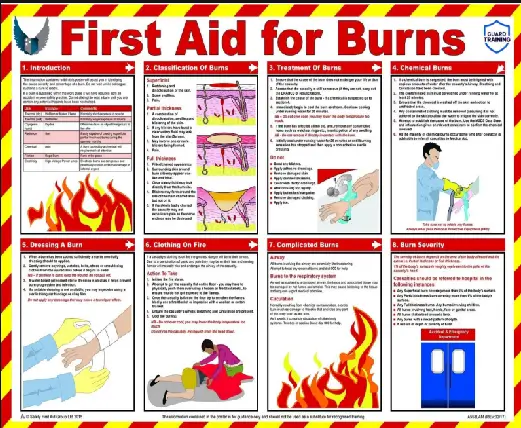
Everyone learns a bit differently, so these extras are there to give you more options when you’re studying. You’ll come across visual resources, quick reference materials, reminders, and supporting documents built to reinforce and build on the topics covered through your course.
The trick is to actually use them, rather than glancing at them once and forgetting they exist. Fold them into your regular training routine instead.
For example, you can:
- Print useful resources and keep them in a folder for quick review
- Stick key information near your study area as a reminder
- Save visual resources to your phone or tablet for easy access
- Use them as a screensaver or background image to keep important points familiar
- Review them before assessments or whenever you’re refreshing your knowledge
- Jot your own notes or highlight key information on the resources
The more ways you interact with your training materials, the easier it gets to remember the information and turn it into practical knowledge.
Top study tip: If there are any resources with information you’re struggling to remember, read it out loud and talk through the information as if you’re explaining it to someone else.
Explaining something forces you to actually understand it, rather than just recognize it. It’s easy to skim a line and assume it’s sunk in, but it’s a different story when you have to walk through it verbally, step by step, in a way that would make sense to someone hearing it for the first time.
Study Like a Professional Guard With Online Courses
We put a great deal of effort into creating our PDFs, presentations, quizzes, videos, and additional resources to make your learning experience practical and valuable. Our goal is to give you high-quality materials that are easy to follow and help you build the knowledge needed for a thriving career in security.
Still, the real benefit of any training resource comes down to how you use it. The most effective learners review information, test themselves, and practice scenarios, using the resources available to strengthen their understanding, rather than simply moving through modules and clicking on to the next one.
Treat your training as preparation for real responsibility. Use your course materials actively, revisit important topics, and practice applying what you learn to realistic security situations.
The effort you put into your training now, paired with how you use the resources provided, can help you become a capable, confident, prepared security professional.
Learn more about what it takes to become a successful security guard by exploring our blog, where you’ll find practical guides, industry insights, advice, and more to support your career.
