


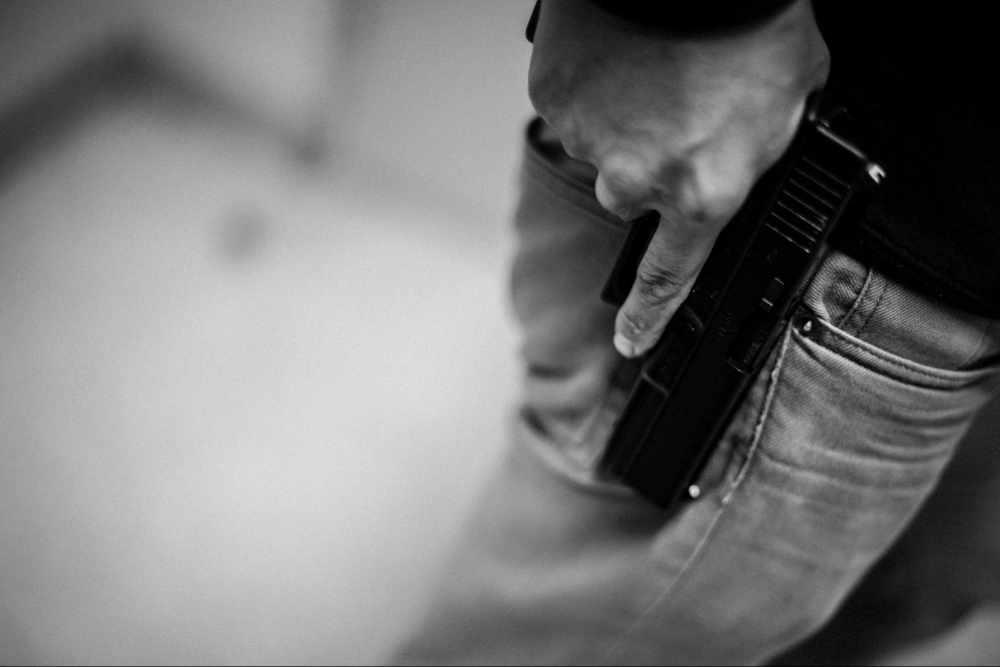
Active shooter events can turn an ordinary day into a scene of chaos and fear, and security guards must be prepared to act.
Through active shooter training, guards learn practical strategies for detecting potential signs of an attack, understanding shooter behavior, and taking appropriate actions to protect themselves and others.
Through this guide, you’ll learn what active shooter training for security guards involves, how it prepares you to respond under pressure, and what to expect from online and in-person courses.
What is an Active Shooter?
An active shooter is a person who is killing or attempting to kill people in a populated space using a gun, knife, or another weapon. These attacks are unpredictable and often end within a few minutes.
Active shootings can occur anywhere, but most happen in workplaces, with the biggest motivator being an employment-related issue, such as a recent termination.
Identifying a Potential Active Shooter Situation
Many attackers show clear behavioral and emotional changes before acting, patterns that indicate growing anger, hopelessness, or fixation on perceived injustices. Identifying these signals and taking action can help connect individuals in distress with the proper support and alert law enforcement before a violent act takes place.
Possible warning indicators include:
- Erratic or aggressive behavior
- Substance abuse or increased dependence on drugs or alcohol
- Withdrawal from coworkers, friends, or family
- Declining job performance or engagement
- Sudden, dramatic personality or lifestyle changes
- Financial stress
- Ongoing legal disputes
- Obsessive or threatening comments about revenge or retaliation
These behaviors don’t always signal violent intent, but it’s important to always stay alert and observant, especially for security guards who regularly interact with the same people and are often the first to notice subtle changes that others might overlook.
How Should Security Guards Prepare for an Active Shooter?
Security guards can help protect themselves and others by preparing to take the appropriate action during an active shooter event.
For example, all guards should know how to:
- Activate emergency plans: Thoroughly review and memorize your site’s emergency plan, and make sure you understand the lockdown procedures and communication chain.
- Alert law enforcement: Memorize the key information you’d need to report, such as the site address and main access points. Remember to always keep your phone or radio at hand so you can make the call quickly under pressure.
- Direct civilians to exits or safe areas: Learn each site inside and out, including the locations of every entrance, hallway, stairwell, and emergency exit. Mentally map out where to go or direct others if shots were fired.
- Lock and barricade access points: Practice cover and concealment. Learn which structures in your area actually stop bullets (concrete walls, large pillars) and which only hide you (furniture, drywall), so you know where to stay safe during gunfire.
- Use radios to relay accurate information: Keep your radio communication skills sharp by practicing giving short, direct updates, including the location, description, and movement of the threat.
Security Guard Responses in Active Shooter Incidents
In an active shooter situation, security guards are not expected to apprehend the shooter or attempt to stop them.
Your own safety is always the priority. If safe to do so, you can also protect and assist others.
In moments of panic, the public may look to guards for guidance. By representing authority, guards can reduce fear and create order, helping others follow directions and move toward safe areas with less confusion.

What Is Active Shooter Training?
Active shooter training teaches guards how to recognize potential threats and respond appropriately during violent incidents. This training is recommended for any guard, regardless of experience or assignment, because every site and situation can be susceptible to an active shooter attack.
What Do You Do in Active Shooter Training?
Active shooter training will vary in length and content, and can be taken either in-person or through an online platform.
At Guard Training, our Active Shooter Safety and Protocols course covers:
- Historical trends, public perceptions, and FBI data
- Early warning signs and behavioral indicators
- Shooter mindset and motives
- Pre-incident preparedness and mental readiness
- Responsibilities before, during, and after an incident
- Applying response tactics
- Contacting emergency services and relaying key information
- Guiding civilians and assisting first responders
- Cooperating with responding law enforcement officers
- Reporting and documentation after incidents
How Long Is Active Shooter Training?
Online active shooter training usually lasts about 2 hours, while our course runs 2.5 hours to provide extra guidance, scenario examples, and practical tips for real-world situations.
Completing training in person generally takes longer due to scheduling, travel, and on-site exercises, and it can take 1 or 2 days to complete.
Is Active Shooter Training Required in California?
In California, security guards must complete the Appropriate Use of Force Course (along with the Powers to Arrest course) to obtain a guard card. This course introduces and familiarizes guards with topics outlined in section 7583.7 of the Business and Professions Code, including active shooter situations.
The general training covers:
- Recognizing an active shooter
- Understanding the roles and responsibilities of security personnel
- Reviewing real-life scenarios to apply learned principles
Security service providers may also require guards to complete specific training, such as active-shooter preparedness, at their discretion.
Active Shooter Models All Guards Should Know
Although guards are not mandated by law to complete specific active shooter training beyond the active shooter section in the appropriate use of force course, it’s still beneficial to learn the basics of different models, which, when followed, can save lives.
While training courses provide more information and specific examples, the following models can be used as a practical reference for general knowledge.
The “Run, Hide, Fight” Model
The Run, Hide, Fight approach, promoted by the FBI and Department of Homeland Security, outlines a simple way to respond if an active shooter event takes place.
It’s not a replacement for full training, but it provides a quick, easy-to-remember process to improve your chances of getting out of the situation alive.
Run, Hide, Fight active shooter training outlines three steps:
- Run
- Move fast and put distance between you and the threat.
- Keep an eye out for alternate exits, and if one is blocked, switch routes.
- Leave bags and personal things behind.
- Don’t stop until you’re somewhere safe.
- Follow police instructions right away.
- Hide
- If you can’t escape, find a good hiding spot that keeps you out of sight.
- Lock and barricade doors if you can.
- Silence phones and stay quiet.
- Stay alert for a chance to run.
- Fight
- Only use force as a last resort when your life is in immediate danger.
- Grab whatever you can as a weapon and act fast.
- Once the threat is down or you can escape, get somewhere safe and call 911.
The “ALICE” Model
ALICE active shooter training builds on traditional strategies and draws on lessons from past incidents to help people respond confidently and decisively.
It’s recognized by the federal government for training students and staff in schools, but the principles apply anywhere people need to prepare for an active shooter situation.
What Does ALICE Stand for in Active Shooter Training?
ALICE is an acronym, but it’s not a strict step-by-step process. Each letter represents an option you can choose depending on the situation. Individuals are encouraged to choose the option that fits the situation and be ready to switch strategies as needed.
- Alert
Stay aware of your surroundings and signs of danger, such as gunfire, panicked witnesses, PA announcements, or mobile alerts.
- Lockdown
If you can’t evacuate:
- Lock and barricade doors with belts, chairs, or desks.
- Cover windows and check for alternate exits.
- Call 911 and stay out of doorways.
- Silence phones and gather improvised weapons.
- Inform
Share who, what, where, when, and how using PA systems, flash alerts, or radios to help others make safe decisions and guide responders.
- Counter
As a last resort:
- Make noise, throw objects, and create distractions.
- Work with others to overwhelm the attacker.
- Use anything as a weapon and fight aggressively if needed.
- If you gain control, call 911 and follow police instructions.
- Evacuate
If safe, get out quickly:
- Run in a zigzag and keep moving until you’re far from danger.
- Take something to throw if needed.
- Use caution with window exits, and improvise ropes and aim for soft landings like shrubs or grass.
Preparing for Active Shooters as a Security Guard
While not always legally required, completing active shooter training and practicing regular drills can greatly increase a security guard’s ability to protect themselves and others.
Searching “active shooter training near me” can help you find nearby classes in your area. If you’d rather avoid in-person sessions and reduce travel costs, you can take advantage of flexible online training courses.
Combined with mental rehearsal and self-directed scenario practice, active shooter training prepares security guards to act quickly and confidently in high-stakes situations where every second matters.
