


Security guards use industry-specific terms every day.
You’ll come across them in job descriptions, training courses, incident reports, site instructions, post orders, and daily conversations when on duty.
Security terminology forms the shared language that keeps a site running safely and professionally, and if you have some gaps in your knowledge, you may struggle to understand instructions, communicate clearly with colleagues, or carry out your duties correctly.
In this security guard glossary, we break down some of the most common terms you’ll need to know to thrive in this career. Refer to them before a job interview, print out a copy to keep close at hand during your first few shifts, or refresh your memory after completing your training.
A to Z Security Guard Terms Glossary
A
Access Control
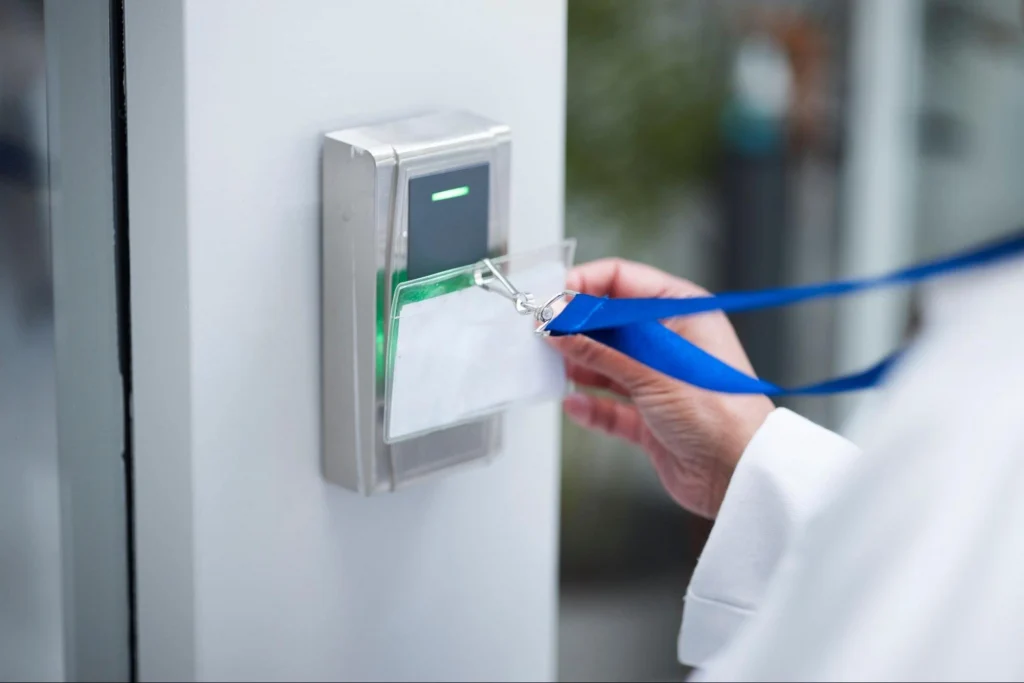
Access control is the process of controlling who can enter or leave a building, room, or restricted area. Its purpose is to make sure only authorized people are allowed access while preventing unauthorized visitors from entering.
Depending on the site, access control duties for security guards can involve checking ID cards, signing in visitors, issuing visitor passes, monitoring entrances and exits, operating security gates, or verifying credentials using key cards, PIN codes, or biometric scanners.
Used in a sentence:
“Your primary responsibility during this shift is access control at the main entrance, ensuring everyone entering the building has valid identification.”
Alarm Response
Alarm response is the process a security guard follows when an alarm is activated. The guard’s role is to determine the cause of the alarm, respond appropriately, and help keep people and property safe.
An alarm could be triggered by a break-in, fire, unauthorized access, equipment malfunction, or a medical emergency. Since many alarms are false, guards should investigate carefully before taking further action.
Typical responsibilities involved in alarm response are:
- Assessing the situation
- Investigating the source of the alarm
- Notifying supervisors or emergency services
- Completing an incident report
Used in a sentence:
“The guard followed the site’s alarm response procedure after the warehouse intrusion alarm was activated.”
Armed Security Guard
An armed security guard is a licensed security professional who is authorized to carry a firearm while on duty. They are usually assigned to sites where there is a greater security risk or where valuable people, property, or assets need extra protection.
Common places where armed guards are deployed are:
- Banks and financial institutions
- Government buildings
- Critical infrastructure
- Cash-in-transit services
- High-value retail locations
Compared to unarmed guards, armed security guards must complete additional training, pass firearms qualifications, and obtain the required licenses or permits before carrying a weapon.
The exact training and licensing requirements depend on each state’s security guard regulations.
Used in a sentence:
“An armed security guard was stationed at the cash handling facility to deter robbery attempts.”
Asset Protection
Asset protection refers to the actions taken to prevent valuable property, resources, and information from being lost, stolen, damaged, or improperly used.
For security guards, asset protection often means helping prevent theft, monitoring for suspicious behavior, securing restricted areas, conducting patrols, checking deliveries, and responding to incidents that could result in loss or damage.
Assets can include physical items such as equipment, vehicles, merchandise, and buildings, as well as non-physical assets like confidential information or company resources.
Used in a sentence:
“Regular patrols and CCTV monitoring are important parts of the company’s asset protection strategy.”
B
Backup Officer
A backup officer is another security guard who is called in to help when a situation needs extra support. While many incidents can be handled by one guard, some situations are safer and easier to manage with another officer present.
Requesting backup is often the safest course of action when a security guard believes an incident could escalate beyond what one person can manage alone.
Common situations where backup is requested include:
- Dealing with aggressive individuals
- Responding to trespassers
- Managing large crowds
- Investigating suspicious activity
- Assisting during emergency situations
Used in a sentence:
“The guard requested a backup officer after discovering several individuals trespassing on the construction site.”
Behavioral Detection
Behavioral detection is the practice of observing people’s actions, body language, and behavior to identify signs that someone may pose a security risk. Rather than focusing on appearance, security guards use observation skills to look for behaviors that are unusual, suspicious, or otherwise out of place.
For example, a person repeatedly avoiding security staff, watching entrances closely, attempting to enter restricted areas, or staying in an area without a clear reason may draw a guard’s attention.
Used in a sentence:
“The guard’s behavioral detection training prompted them to monitor a visitor who repeatedly attempted to access restricted areas.”
C
CCTV (Closed-Circuit Television)
CCTV is a system of security cameras that allows security teams to monitor and record activity. Unlike regular cameras that anyone can access, CCTV footage is sent to a private system that can only be viewed by authorized users, such as security personnel.
Security guards use CCTV to:
- Watch for suspicious behavior
- Monitor key areas
- Respond to incidents
- Review recordings when an event requires investigation
Used in a sentence:
“The security guard reviewed the CCTV footage to determine how the suspect entered the building.”

Chain of Command
The chain of command is the reporting structure that defines who security guards report to and who has the authority to make decisions. It provides a clear structure, so guards know who to contact, who can provide instructions, and who should be informed about important incidents.
For security guards, following the chain of command helps make sure concerns, reports, and requests reach the right person. For example, a guard may report an incident to their supervisor, who then decides if it needs to be escalated to a site manager or higher-level security personnel.
A typical chain of command may include security guards, supervisors, site managers, and regional or operations managers.
Used in a sentence:
“The guard reported the incident to their supervisor in accordance with the company’s chain of command.”
Code of Conduct
A code of conduct is a set of rules and professional standards that outlines how security guards are expected to behave while on duty.
It helps ensure guards behave responsibly and maintain a professional attitude when dealing with the public, clients, and coworkers.
Most employers require security guards to follow a code of conduct covering areas such as honesty, integrity, confidentiality, professionalism, and appropriate use of authority.
Common expectations include:
- Treating everyone with respect
- Following company policies
- Maintaining confidentiality
- Acting with honesty and integrity
- Remaining professional at all times
Used in a sentence:
“Accepting gifts or tips from visitors would be a breach of the company’s code of conduct.”
Crowd Control
Crowd control is the process of managing groups of people to keep an area safe and organized.
Large crowds can create challenges such as blocked walkways, overcrowded areas, conflicts, or difficulty during emergencies. Security guards help manage these risks by using crowd-control skills to monitor crowd behavior, direct movement, control access points, and step in when issues arise.
Crowd control is commonly required at concerts, sporting events, festivals, shopping centers, and other public gatherings.
Used in a sentence:
“Additional security staff were assigned to crowd control during the stadium’s sold-out event.”
D
Daily Activity Report (DAR)
A Daily Activity Report is a written record that security guards complete to document what happened during their shift. It provides a summary of their activities and observations while on duty.
Even when there are no major incidents, a DAR is still important because it creates a record o that supervisors, clients, and incoming guards can use to understand what occurred and follow up on issues when needed.
A DAR may include:
- Patrols completed
- Incidents observed
- Visitor activity
- Equipment issues
- Maintenance concerns
- Security checks performed
- Unusual observations
Learn more about DARs with our step-by-step guide to writing security guard reports.
Used in a sentence:
“At the end of the shift, the guard completed the Daily Activity Report detailing patrols, visitor activity, and a faulty gate sensor.”

De-escalation
De-escalation means taking steps to calm down a tense or difficult situation before it becomes more serious. For security guards, this usually involves using communication skills, patience, and a calm approach to reduce anger, frustration, or aggression.
When a person is upset, angry, or acting aggressively, a guard’s goal is to lower the tension and gain control of the situation without making it worse.
De-escalation techniques are commonly used by guards when dealing with arguments, unhappy customers, disruptive individuals, or people experiencing heightened emotions.
Used in a sentence:
“The security guard successfully used de-escalation techniques to calm an upset customer before the situation became disruptive.”
Deterrence
Deterrence is the use of security measures to discourage people from committing crimes or breaking rules. The idea is that when people know they are being watched or that security measures are in place, they may think twice before engaging in unwanted behavior.
Security guards play an important role in deterrence because their visible presence can make potential offenders less likely to attempt theft, vandalism, trespassing, or other security violations.
Examples of deterrence measures include:
- Visible security patrols
- Uniformed security guards
- CCTV cameras
- Security lighting
- Controlled access points
Used in a sentence:
“Visible vehicle security patrols are an important form of deterrence against criminal activity on site”
E
Emergency Action Plan (EAP)
An Emergency Action Plan is a written plan that explains what people should do during an emergency. It provides clear instructions for responding to situations such as fires, medical emergencies, severe weather, security threats, or other unexpected events.
The purpose of an EAP is to help people respond quickly and safely while reducing confusion during a stressful situation.
Security guards are often responsible for knowing the plan, helping guide people to safety, securing affected areas, and communicating important information to supervisors or emergency responders.
An Emergency Action Plan may include:
- Evacuation procedures
- Emergency contact information
- Assembly points
- Roles and responsibilities
- Fire and medical emergency procedures
- Shelter-in-place instructions
Used in a sentence:
“The security team reviewed the Emergency Action Plan before the building opened to ensure everyone understood their responsibilities.”
Evacuation Procedures
Evacuation procedures are the planned actions people follow to safely leave a building or area during an emergency. They provide a clear process for getting people away from danger while keeping the evacuation organized and preventing panic.
Security guards are often responsible for helping manage evacuations by directing people toward safe exits, keeping pathways clear, assisting anyone who needs help, and making sure people gather at the designated assembly point.
Guards may also help prevent people from returning to the area until it has been declared safe.
Common evacuation procedures include:
- Activating or responding to an alarm
- Directing people to the nearest safe exit
- Assisting individuals who need help
- Preventing re-entry until authorized
- Reporting when evacuation is complete
Used in a sentence:
“The security guard followed the site’s evacuation procedures after the fire alarm was activated.”
F
Fixed Post
A fixed post is a security assignment where a guard is responsible for staying in one specific location, such as a restricted area or entrance, during their shift.
Instead of moving around the site, the guard remains at their assigned post, monitoring activity, controlling access, and responding to issues in that area.
Used in a sentence:
“The guard was assigned to a fixed post at the main entrance to verify all visitors before allowing entry.”
G
Guard Card
A guard card is the license that allows someone to legally work as a security guard. It shows that the individual has completed the required steps to become a security guard, such as training, background checks, and any other state requirements.
The exact requirements for getting a guard card depend on where you live. For example, in California, security guards must obtain a guard card through the state licensing process before they can work on assignment.
Many security companies require a valid guard card during the hiring process because it confirms that an applicant is authorized to work in the security industry.
Used in a sentence:
“The applicant completed the necessary training and received their BSIS guard card“

I
Incident Report
An incident report is a written record that explains what happened during a security-related event. It documents important details about the situation, such as when and where it occurred, who was involved, and what actions the security guard took in response.
Security guards complete incident reports to create an accurate record that can be reviewed later by supervisors, clients, law enforcement, or insurance companies. A good incident report should stick to the facts and describe what the guard saw, heard, and did without adding personal opinions or guesses.
A typical incident report includes:
- Date and time of the incident
- Location
- Names or descriptions of individuals involved
- Description of what occurred
- Actions taken by the security guard
- Witness information
- Evidence collected, if applicable
Used in a sentence:
“The security guard completed an incident report after a visitor slipped in the lobby and required medical assistance.”
Incident Response
Incident response is the process of taking action after a security incident happens. It involves assessing the situation, following the correct procedures, and taking steps to protect people, property, and the site.
The type of response needed depends on what happened and how serious the situation is.
Security guards may need to investigate the issue, notify supervisors or emergency services, secure the area, assist those involved, and document what occurred.
A good incident response ensures that the right actions are taken and helps prevent the situation from worsening.
Examples of incidents requiring a response:
- Suspicious persons
- Fire alarms
- Medical emergencies
- Theft
- Unauthorized entry
- Workplace conflicts
Used in a sentence:
“The security team followed the site’s incident response procedures after an unauthorized person entered the restricted area.”
L
Loss Prevention
Loss prevention is the process of using security measures and procedures to reduce theft, fraud, damage, and other situations that can cause a business to lose money or valuable assets.
Security guards often play an important role in loss prevention by monitoring activity, identifying suspicious behavior, monitoring security systems, enforcing company policies, and responding to problems.
Common loss prevention measures include:
- CCTV monitoring
- Store or facility patrols
- Access control
- Inventory checks
- Employee and visitor screening
- Investigating suspicious activity
Used in a sentence:
“The security guard supported the store’s loss prevention efforts by monitoring CCTV and responding to suspected theft.”
O
Observation Skills
Observation skills are the ability to notice, remember, and accurately describe details about people, places, objects, and events. For security guards, strong observation skills are important because small details can sometimes help identify risks, prevent incidents, or provide useful information during an investigation.
Security guards use observation skills throughout their daily duties, including during patrols, access control, CCTV monitoring, and when responding to incidents.
Examples of things security guards observe:
- Suspicious behavior
- Changes to a location or environment
- Damaged equipment or property
- Unusual sounds or activity
- Descriptions of people, vehicles, or objects
Used in a sentence:
“The guard’s strong observation skills helped them identify that a normally locked door had been left open during their patrol.”
P
Patrol
A patrol is when a security guard moves through an assigned area to monitor what is happening, identify potential problems, and help maintain a safe environment. Patrols allow guards to check areas that may not have constant supervision and spot issues before they become bigger concerns.
During a patrol, security guards may look for unauthorized activity, safety hazards, damaged property, or anything unusual that needs attention. Patrols can be performed at scheduled times or at random intervals to make the guard’s movements less predictable and improve security.
Common patrol responsibilities include:
- Checking doors, gates, and restricted areas
- Looking for safety hazards
- Monitoring suspicious activity
- Ensuring security procedures are being followed
- Reporting unusual behavior
Used in a sentence:
“The guard completed a foot patrol of the property and reported a damaged fence near the rear entrance.”

Post Orders
Post orders are written instructions that explain what a security guard needs to do while working at a specific site or assignment. They outline the guard’s responsibilities, daily tasks, and procedures for handling different situations that may occur during a shift.
Because every location has different security needs, post orders are created specifically for each site. They help guards understand what is expected of them and what procedures to follow when an issue occurs.
Post orders may include:
- Required patrol duties
- Access control procedures
- Emergency response instructions
- Reporting requirements
- Contact information
- Equipment procedures
- Rules for interacting with visitors and employees
Used in a sentence:
“Before starting the shift, the security guard reviewed the post orders to understand the site’s entry procedures and emergency responsibilities.”
Public Safety
Public safety refers to the actions taken to protect people from harm, danger, and unsafe situations. For security guards, supporting public safety means helping create a secure environment by identifying risks, responding to problems, and assisting people when they need help.
Examples of public safety responsibilities include:
- Responding to emergencies
- Reporting hazards
- Assisting during evacuations
- Preventing unauthorized access
- Helping injured or vulnerable individuals
Used in a sentence:
“The security team helped maintain public safety by managing crowds and keeping emergency exits clear during the event.”
R
Radio Codes
Radio codes are short words, phrases, or signals used by security teams to communicate quickly over two-way radios. They help guards share important information clearly and efficiently when situations require a fast response.
Many security teams use radio codes such as ten-codes to simplify common messages, such as requesting assistance or confirming that an area is secure.
However, the exact codes used can vary between companies, sites, and locations, so security guards should always follow the communication procedures provided by their employer.
Common uses of radio codes include:
- Requesting backup or assistance
- Reporting incidents
- Communicating a guard’s location
- Confirming messages have been received
- Sharing important updates with the security team
Used in a sentence:
“The security guard used the correct radio codes to quickly communicate the situation to the rest of the security team.”
S
Security Clearance
A security clearance is an approval that allows a person to access restricted areas, confidential information, or sensitive facilities. It confirms that an individual has been reviewed and authorized to access information or locations that are not open to everyone.
The level of clearance a person receives depends on their job duties and the level of access they need. For security guards, checking clearances may be part of access control duties at locations where protecting sensitive information, equipment, or areas is important.
Used in a sentence:
“The security guard checked that all contractors had the required security clearance before allowing them into the restricted area.”
Situational Awareness
Situational awareness is the ability to understand what is happening around you and recognize anything that may require attention. For security guards, it means staying alert to people, activities, and changes in the environment so they can identify potential risks and respond quickly.
A guard with strong situational awareness pays attention to details, notices when something seems unusual, and uses that information to make better decisions. This skill is especially important during patrols, crowd control, access control, and emergency situations.
Examples of situational awareness include:
- Recognizing unusual behavior
- Noticing changes in the environment
- Identifying safety hazards
- Monitoring crowd activity
- Being aware of exits and emergency routes
Used in a sentence:
“The guard’s situational awareness helped them notice that a normally secure door had been left open during the patrol.”
Site-Specific Training
Site-specific training is the training security guards receive about the particular location where they will be working. Since every site has its own layout, rules, risks, and responsibilities, this training helps guards understand exactly what is expected of them at that assignment.
During site-specific training, guards learn important details about the location so they can perform their duties properly and respond correctly if a problem occurs. It helps ensure guards are familiar with the site’s procedures before they begin working independently.
Site-specific training may cover:
- Post orders
- Emergency procedures
- Access control requirements
- Site hazards
- Equipment use
- Reporting procedures
- Important contacts
Used in a sentence:
“Before starting the assignment, the new security guard completed site-specific training to learn the building’s emergency procedures and access rules.”
T
Trespassing
Trespassing occurs when someone enters or stays on property without permission from the owner, tenant, or someone with authority to allow access. Security guards commonly deal with trespassing situations while monitoring properties, protecting restricted areas, and controlling who is allowed on site.
When a security guard encounters a suspected trespasser, they must follow the site’s procedures and applicable laws. Depending on the situation, this may involve asking the person for identification, informing them they must leave, reporting the incident, or contacting law enforcement if necessary.
Used in a sentence:
“The security guard contacted their supervisor after finding an individual trespassing inside the restricted construction area.”
U
Use of Force
Use of force refers to the physical actions a security guard may take to control or respond to a situation when it is legally allowed and necessary. Security guards are trained to use only the amount of force needed to address the situation and protect themselves or others from harm.
The rules surrounding the appropriate use of force can vary depending on the location, employer policies, and local laws. Guards should understand their responsibilities, know the limits of their authority, and properly document any incident where force is used.
Situations where use of force may be considered include:
- Protecting themselves or others from harm
- Responding to an immediate threat
- Preventing violent behavior
- Assisting with the removal of a person when legally permitted
Used in a sentence:
“The security guard completed a detailed report after a use of force incident occurred during the altercation.”

V
Visitor Management
Visitor management is the process of controlling and keeping track of people who enter a facility but do not regularly work there. This includes visitors such as guests, contractors, vendors, and delivery personnel.
Security guards often handle visitor management by checking identification, confirming that people are authorized to enter, issuing visitor badges, and keeping records of who is on site, all of which help organizations know who is inside the facility at all times.
Used in a sentence:
“The security guard followed visitor management procedures by verifying the contractor’s identification before allowing entry.”
Vulnerability Assessment
A vulnerability assessment is a review used to find weaknesses or potential security risks within a facility, system, or set of procedures. The goal is to identify problems before they lead to incidents and determine what changes can be made to improve security.
Security guards can support vulnerability assessments by reporting hazards, identifying areas with poor security, noticing access control issues, and sharing observations about daily operations. Their experience on the ground can help highlight risks that may not be obvious during a formal review.
Used in a sentence:
“The security manager conducted a vulnerability assessment after noticing several weaknesses in the facility’s access control procedures.”
Z
Zone Patrol
A zone patrol is a type of security patrol where a guard is assigned to monitor a specific section or area of a property, known as a zone. Instead of watching the entire site at once, security teams divide larger locations into smaller zones to make patrols more organized and easier to manage.
Used in a sentence:
“The security guard completed a zone patrol of the east wing and reported a damaged emergency exit door.”
Give Yourself a Head Start in Your Security Guard Career
Taking the time to learn these security guard terms before starting a job can give you an advantage during interviews, training, and your first few shifts, since employers will look for candidates who understand the industry and are prepared to take their responsibilities seriously.
Want to find other ways to stand out and thrive as a security guard? Try our online training courses and complete them at your own pace to learn everything you need to perform the wide range of duties the guard role requires.
At GuardTraining, we’ll help you every step of your career, giving you the confidence and knowledge you need to start each assignment with greater confidence and be better prepared for the challenges of the job.
