


Do you want to start a career in security and prove your worth to employers?
Working as a security guard can offer plenty of variety and be incredibly rewarding, but it also comes with high levels of responsibility and expectations. Getting your foot in the door and moving up the ladder takes preparation, dedication, focus, and a willingness to keep learning, from before you get your license to even after working in the field for years.
Let’s break down the key steps for building a successful security guard career, so you know what to expect, how to stand out, and how to advance over time.

1. Getting Started in Security
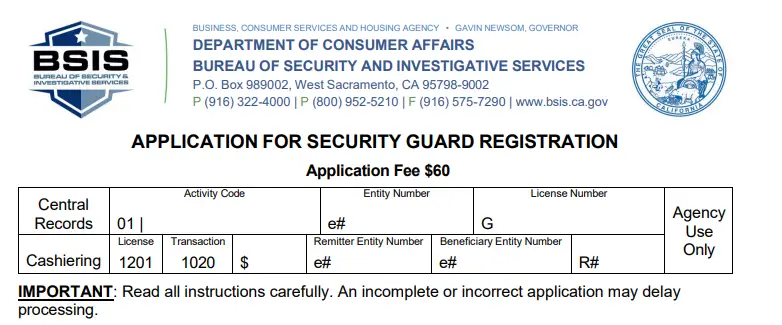
If you want to become a security guard in the US, the first step is obtaining your license, which permits you to work legally in this role.
Most states require applicants to be at least 18 years old, but some set higher minimum ages, and you can check your state’s licensing agency for specific guidelines.
When applying for your license, you can expect to complete a criminal background check, which may include fingerprinting through state and federal databases. You’ll also need to provide personal identification and some documentation, such as proof of training or education, which can either be printed and mailed or attached in PDF form in an online application.
Depending on the state, you may be required to complete specific training before you receive your license. For example, if you want to become a security guard in California, you must complete a course on the “Power to Arrest” and the “Use of Force” through an approved training provider before you can obtain your guard card.
After submitting your application, background check results, and proof of completed training, your license will be processed, which generally takes several weeks to a few months.
Once processed and issued, you’ll receive a physical license card, and you’ll be permitted to legally work as a security guard.
Tip: Even after you get your license, many states require additional post-licensing training, so check your state’s requirements to stay compliant.
Variations Across States
Licensing requirements differ across the US, and age limits, background check procedures, training mandates, and fees all vary.
Make sure to consult your state’s regulatory agency for up-to-date guidance so you can meet all criteria and can start your career smoothly.
2. Applying to Jobs and Completing Interviews
Once you’re licensed as a security guard, you’re ready to start applying to jobs. But first, you’ll need to create a CV.
Crafting a Strong CV
Your CV is your first impression, so you want it to be neat and easy to read while demonstrating all your relevant skills and experience.
Here are some quick tips to help you put together a security guard CV that will make you stand out to employers:
- Highlight any previous experience and relate it to the roles you’re applying for, even if it’s not security work. For example, if you’ve worked in customer service, write about some skills you learnt and applied that could help you in a security role, such as communicating clearly, teamwork, attention to detail, and handling stressful situations.
- Tailor your CV for each job by scanning the posting and reflecting the skills they’re looking for. For instance, if the listing mentions conflict resolution and vigilance, make sure your CV shows that you have experience handling difficult situations or staying alert in busy environments.
- Don’t get caught up with mentioning every single past task, as this will make your CV cluttered and harder for employers to see your key skills.
- Read through your CV several times and paste it into a grammar checker to be sure there are no mistakes.
Once you’ve written your CV, you can head to job search sites like Indeed and LinkedIn and start applying for positions.
Tip: Many employers will also require applicants to provide a cover letter, which is a short introduction that explains who you are and why you’re a good fit.
Even if it’s not mentioned in the application, adding a cover letter can help you stand out and show your enthusiasm for the role.
When writing a cover letter, keep it concise, highlight relevant skills, and tie your experience to what the employer is looking for.
Preparing for Interviews
After you start getting responses to your job applications, you’ll begin getting invites to interviews.
Employers use this stage to understand how you think and communicate, as well as your general personality.
Before any interview, spend time reviewing common security questions and practicing giving clear, direct answers to help you come across as calm and capable under pressure.
We also recommend researching the employer beforehand, including the businesses they serve and anything notable about their operations. For example, a security firm that focuses on providing protective services for industrial sites may be looking for applicants who can follow strict safety protocols, stay alert to potential hazards, confidently handle emergency situations, and be capable of working late hours.
Attending the Interview
On the day of the interview, dress appropriately with ironed clothes and polished shoes. Your hair should be neat, and for men, any facial hair should be well-groomed or clean-shaven. When you show care for your appearance, you’re demonstrating that you value looking professional and taking your responsibilities seriously, which is key for this career path.
During the interview, sit up straight and keep steady eye contact with the interviewer, without staring them down.
Be ready to talk about your experience, your training, and how you approach responsibility in real situations. The interviewer will also want to learn more about who you are as a person, as this will help them decide if you’ll fit in with the team, so be yourself and don’t try to give answers you think they want to hear.
When they’ve finished asking questions, make sure you have a few of your own prepared, as this shows your genuine interest in the role. For instance, you might ask about the typical day-to-day responsibilities, team structure, expectations for new hires, opportunities for training and advancement, or the types of sites you’d be assigned to.

3. Succeeding on the Job
With some preparation and confidence, you’ve landed the job, and you’re ready to step into the world of security.
After the start date in your new role, you’ll likely go through orientation and learn about your employer’s policies, procedures, and expectations.
After that, you’ll be a part of the team, and you should focus on proving your capability and building a reputation as someone others can rely on.
Professionalism
Security guards are expected to be professional at all times, and that includes:
- Wearing the correct uniform
- Carrying the proper equipment
- Arriving on time for shifts
- Following all company rules and procedures
- Communicating respectfully with others
- Managing conflicts calmly and objectively
- Supporting team members
Accountability
Throughout your security career, you’re bound to make mistakes. Everyone does at some point, so don’t dwell on them.
What matters is whether you can learn from those mistakes and take responsibility for them.
Being accountable means owning your actions and being honest when things go wrong, while taking steps to fix any mistakes when possible. In security, it also includes keeping supervisors informed and making decisions that protect yourself and the people or property you’re responsible for.
Early on in a new role, you might feel unsure about a lot of decisions and procedures. If that happens, talk to your supervisor as soon as possible instead of trying to figure it out on your own. When you get clarity on anything you’re unsure about, you can avoid mistakes that could affect your reputation as well as your employer’s operations.
Tip: For a closer look at how to stand out and grow in your role, you can read our guide on tips for excelling as a security guard.

4. Training and Developing Your Skills
Even after you’ve landed a job and started working, there’s always room to grow.
New situations and challenges come up all the time, and while experience teaches a lot, training helps you stay sharp and ready for more responsibility.
In some cases, such as renewing your guard card, you’ll need to complete mandatory training.
Your employer may also assign topics through online courses or in-person sessions to help you strengthen your skills and stay up to date with procedures.
Otherwise, you can take training into your own hands and complete it independently in your own time.
Core Training Topics
Taking initiative with your own training can give you an edge throughout your entire security guard career.
Even before applying for your first role, learning about security topics can help you flesh out your CV and show employers that you’re motivated, proactive, and serious about the role.
Training can also help you after landing a job, as it can help you develop skills and confidence faster.
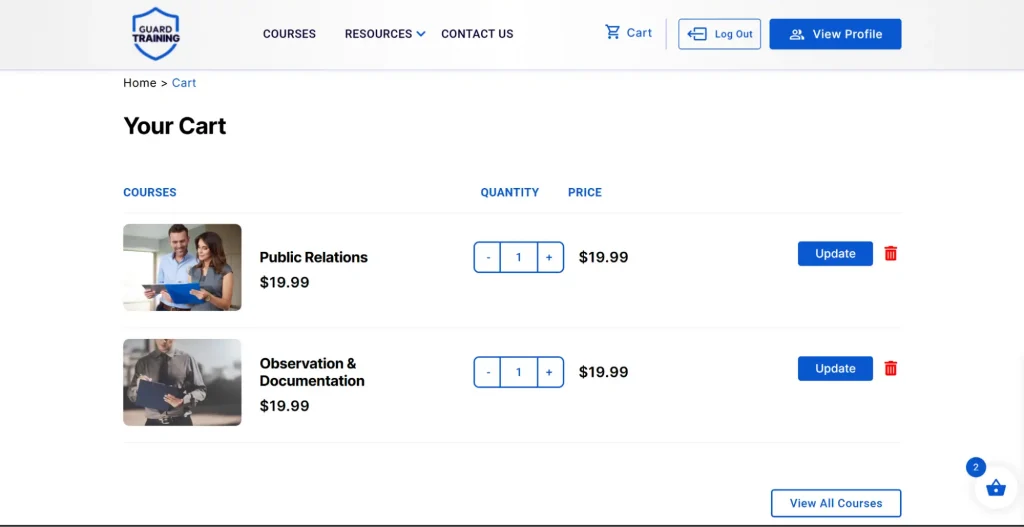
If you choose to complete training online, you can work through courses at your own pace from anywhere, making steady progress in short daily sessions on your phone or laptop.
Here are some core training topics that can help you grow in your security guard career:
- Observation and documentation
- Communication
- Arrests, search, and seizure
- Access control
- Handling difficult people
- Officer safety
- Appropriate use of force
Developing Skills on Duty
Beyond training courses, you can actively develop crucial security skills while working.
For example, observation skills improve every time you patrol a site attentively, noticing details others might miss, and problem-solving and decision-making sharpen each time you respond to unexpected situations and plan the safest, most effective course of action.
Just remember to treat every shift as a learning opportunity rather than passively going through the motions.
Even routine patrols and reports teach valuable lessons about attention to detail, time management, and handling people, which are all skills that will serve you throughout your career.
5. Advancing in Your Career
As you gain experience and work on your skills, you’ll start to see new opportunities for advancement.
After some time, you may be offered higher-level positions that often come with higher salaries, more regular hours, and sometimes other benefits, depending on your employer.
Even if it takes a while before you reach these roles, don’t feel discouraged. You’re still advancing in your security career even when your job title doesn’t change.
Each shift, patrol, report, and training session adds to your experience and reputation. As you prove yourself, doors open to new responsibilities and greater professional recognition.
The path isn’t always linear, but with dedication as a security guard, you’ll see your efforts reflected in the opportunities, trust, and respect that come your way over time.

Building a Long-Term, Successful Security Guard Career
There’s a lot to learn when starting and advancing in your security guard career.
Every stage along the way requires focus and effort, such as writing a strong CV, applying to jobs, showing up prepared on your first day, and performing consistently on every shift.
Your role as a security guard is important, and when you approach the job with the right mindset, it can be a highly rewarding career full of variety, growth, and opportunities to take on more responsibility.
At Guard Training, we support guards at every level. Educational whitepapers help you understand industry expectations, blogs provide tips and strategies to excel on the job, and in-depth courses let you strengthen skills that help you become the best security professional you can be.
Your security guard career is a journey, and we’re here with you every step of the way, helping you grow, learn, and succeed.
