


As you prepare for a career in security, understanding the full scope of security guard duties is essential. The role goes far beyond deterring criminal activity, with responsibilities that can touch nearly every part of a facility. From mastering operational processes and handling emergencies & equipment to managing visitors and maintaining overall safety and order.
When you’re fully prepared for the common security guard responsibilities, you’ll be able to carry them out more confidently and efficiently. It is the key to creating a secure environment and a positive experience for those you protect.
What Are the Core Duties of Security Guards?
The main security guard duties and responsibilities you can expect in this career include monitoring client premises, controlling access, enforcing rules, and interacting with customers.
Let’s look at the general tasks you’ll handle in most security roles:
1. Monitoring and Surveillance
Security guards are primarily deployed to monitor designated areas or facilities. When doing so, you’ll be on the lookout for:
- Suspicious behaviors
- Unusual activity
- Potential hazards
- Unauthorized individuals
- Unattended packages
- Unsafe conditions
If any issues are identified, you will need to follow the appropriate reporting and documentation procedures. For example, notifying your supervisor and completing an incident report precisely as outlined in your post orders.
Operate Surveillance Equipment
Operating CCTV and other surveillance equipment is a standard responsibility. Security roles often include monitoring live feeds, adjusting cameras as needed, and reviewing recorded footage for incident analysis or evidence collection.
Conduct Safety Inspections
Guards regularly inspect safety systems, including locks, alarms, fire detection devices, and emergency exits. They need to ensure that everything is in proper working order.
2. Access Control and Crowd Management
Security guards are responsible for controlling access to restricted or sensitive areas. The core of these activities is to verify each individual’s identification and confirm their authorization to a facility or location.
Access control duties usually go hand in hand with crowd control. The presence of security guards at large events and busy locations is key to minimizing chaos and confusion. Their role is to enforce site rules, prevent overcrowding, and keep people safe.
Control Access to Restricted Areas
Your post may be at an entry point to a facility. For example, near a reception area or at a controlled doorway in front of a restricted section. You might also be assigned at the entrance of a residential complex or parking garage to regulate vehicle entry.
You will check identification cards, access cards, or badges to decide whether someone can enter. If entry is not authorised, you must refuse access. You will document and report any unauthorised entry attempts. Depending on the situation, this may include notifying a supervisor or escorting the individual off the premises.
Manage Crowds
Crowds can range from small groups of a few people to large gatherings of several hundred. You might manage them in areas such as:
- Lobbies
- Event halls
- Shopping centers
- Transportation hubs
- Outdoor venues
Your general crowd-management duties will include guiding foot traffic and keeping movement orderly. You may also be in charge of enforcing site rules, supporting event staff, and assisting people with directions. Another key focus in these situations is to maintain clear access points for responders or on-site teams.
3. Patrolling and Response
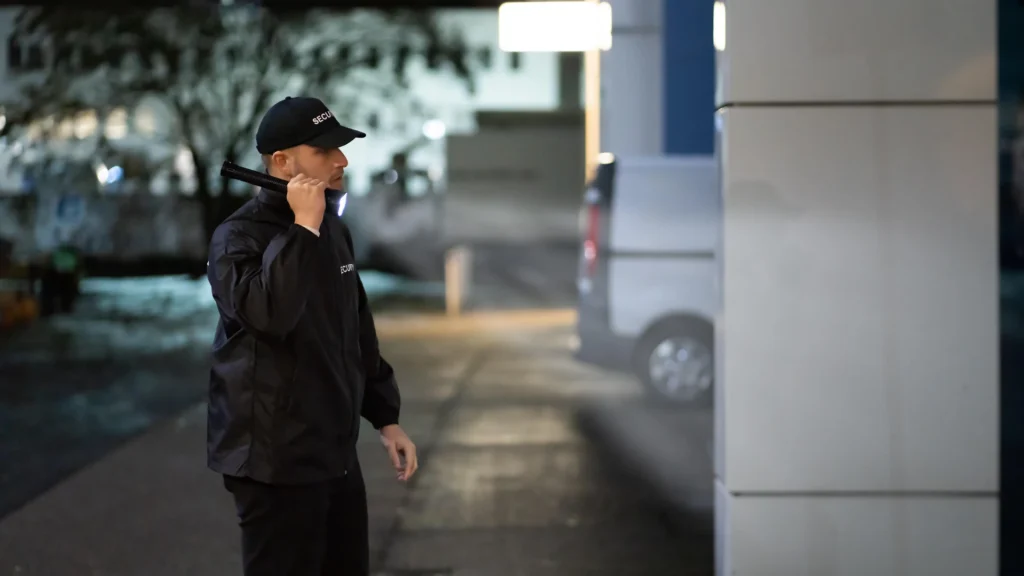
Security guards regularly patrol assigned areas to deter unauthorized activity, spot hazards, ensure safety rules are being followed, and remain visible to discourage unwanted acts or crimes. These patrols can take place on foot inside and outside a facility, or by vehicle, such as a bicycle or a company car.
Patrol Assigned Areas
During patrols, you’ll be routinely assessing anything worth observing and documenting. You may begin a new patrol at specific or randomized intervals, and you’ll walk a designated route to check doors, windows, loading zones, stairwells, parking areas, and other key points around the property.
Respond to Alarms
When an alarm activates, it could signal that someone is attempting unauthorized entry or that a system has detected a problem. Depending on your post orders, during your patrol, you may head to the alarm’s location and investigate the cause, determining if it’s a disturbance, false activation, or actual security breach.
Part of your role includes noting how you responded to the alarm and recording other important details about the incident.
Handle Emergencies
When on patrol or performing other duties, emergencies can occur, such as:
- Fires
- Natural disasters
- Active shooter incidents
- Medical emergencies
In these situations, you’ll guide evacuations, direct people to safe areas, and assist individuals who need help, as long as it doesn’t put your own safety at risk. You may also need to isolate hazards, secure the scene, and keep access routes clear for emergency responders.
If you’re trained and certified in first aid, you may provide basic care until professional responders arrive. After the incident, you must document what happened, your actions, and any observations, following your company’s reporting procedures.
4. Rule Enforcement and Conflict Resolution
Security guards will observe the behavior of employees, visitors, customers, contractors, and other individuals on the premises, identifying rule violations and intervening when necessary to keep everyone safe. This can include:
- Approaching individuals who are complying with rules
- Explaining policies
- Issuing verbal warnings
- Separating parties involved in conflicts
- Reporting repeated rule violations
- Contacting supervisors or law enforcement.
De-escalate Conflicts
When disputes or tense situations arise, you’ll use de-escalation skills to calm down individuals and work towards a safe, agreeable outcome. You may choose to speak calmly to involved parties, keep bystanders away, separate difficult individuals if needed, and use verbal warnings or instructions to prevent escalation.
You’ll then monitor the situation until it’s resolved or until supervisors or law enforcement arrive.
Detain Suspects
If a person engages in criminal or unauthorized activity, such as theft, assault, robbery, armed intrusion, or tampering with safety or security systems, you may need to temporarily secure the individual, prevent them from leaving the area, and maintain your own safety while waiting for law enforcement.
Remember: Unlawfully detaining someone can lead to serious legal consequences, including losing your license or facing imprisonment!
Before acting, be sure you understand the individual’s rights, applicable laws for force, and your powers to arrest in your state. Your company or client may also have specific policies and procedures, so make sure you know exactly what actions are required and permitted in each situation.
5. Incident Documentation and Reporting
Security guards will observe and document activities, incidents, and hazards on the premises to maintain accurate records and support follow-ups. This can include:
- Recording details of security incidents
- Maintaining daily logs of activities, visitor entries, deliveries, and shift handovers
- Identifying potential risks or unsafe conditions and notifying supervisors
- Following post orders and company procedures for documentation and reporting
Write Incident Reports
You’ll record security incidents in detail, including what happened, who was involved, the time and location, and how you responded. You’ll have specific instructions for writing factual and informative reports in your post orders.
Maintain Security Logs
Through security logs, you’ll track key information and events on the premises, such as:
- Daily activities
- Visitor entries
- Deliveries
- Equipment checks
- Shift handovers
These logs are needed to maintain continuity between shifts and provide a clear record of ongoing security operations.
6. Customer Interaction and Assistance
Clients expect security guards to support a positive customer experience while performing their duties. Guards who appear disinterested, unhelpful, or rude can create tension with visitors or staff and undermine the sense of safety on the premises.
Provide Customer Service
You’ll most likely be asked to provide customer service in premises such as retail stores, office buildings, hotels, event venues, and transportation hubs.
While conducting other duties and responsibilities, such as patrolling, monitoring security systems, or managing access, you may also be tasked with:
- Greeting visitors and ensuring they feel welcome
- Giving directions and answering questions
- Assisting with lost-and-found items or minor issues
- Referring concerns to the appropriate staff or supervisor
When providing customer service, you should always remain professional and approachable by speaking clearly, listening carefully to concerns, and staying patient, especially in challenging situations.
Maintain a Professional Appearance
You’ll be expected to follow uniform and grooming standards, stay neat, and present yourself in a way that’s approachable and professional. A positive and thoughtful appearance shows that you take your role seriously and are ready to assist while conducting your duties.
Preparing for Security Guard Responsibilities
In this career, you’ll need the right mix of training, practical experience, and personal development to handle the wide range of security guard duties confidently and professionally.
If you’re concerned about feeling unprepared, whether you’re waiting to obtain your guard card, preparing for your first shift, or just considering if this role is right for you, online courses and training programs can give you a head start, showing you what to expect and how to perform your duties.
When you’re dedicated to this job, your professionalism and commitment to safety will show through. Employers, clients, and customers will recognize that you’re a capable guard who can protect assets, maintain order, and keep everyone safe while performing your responsibilities.
